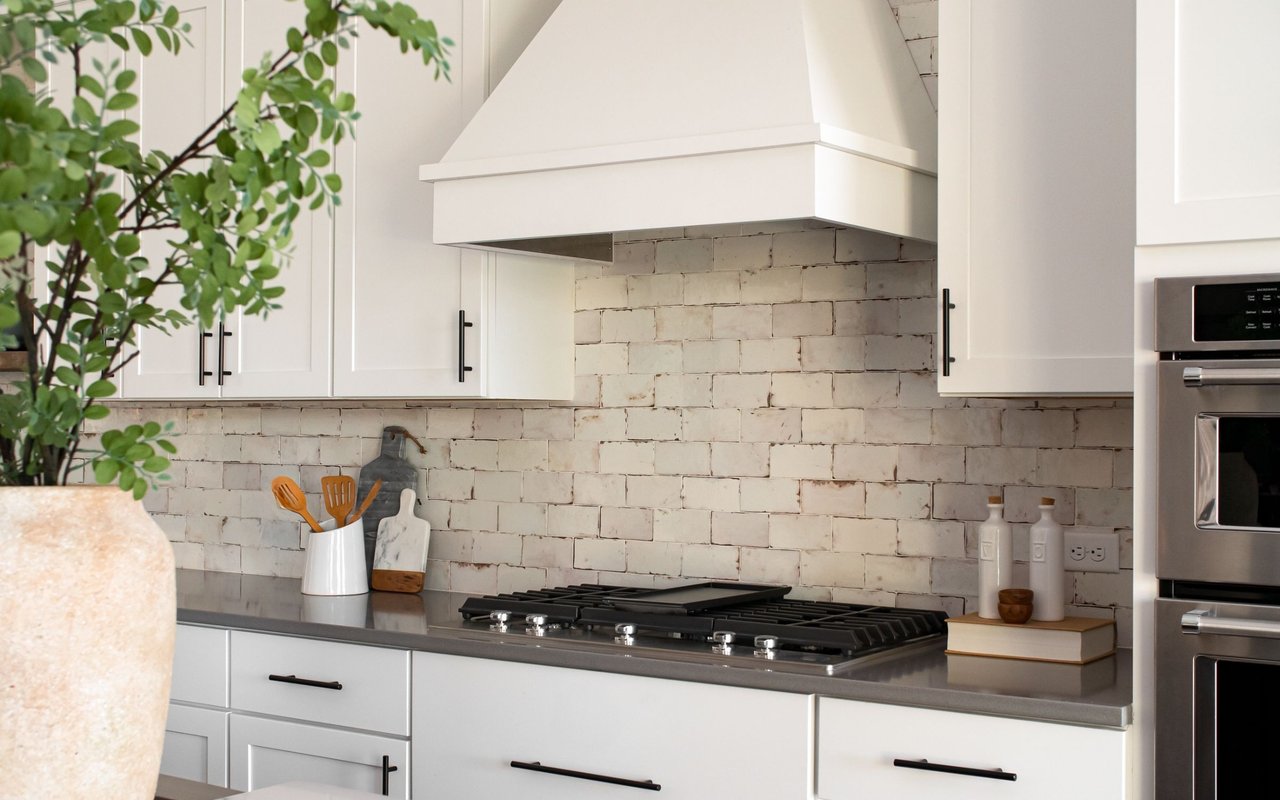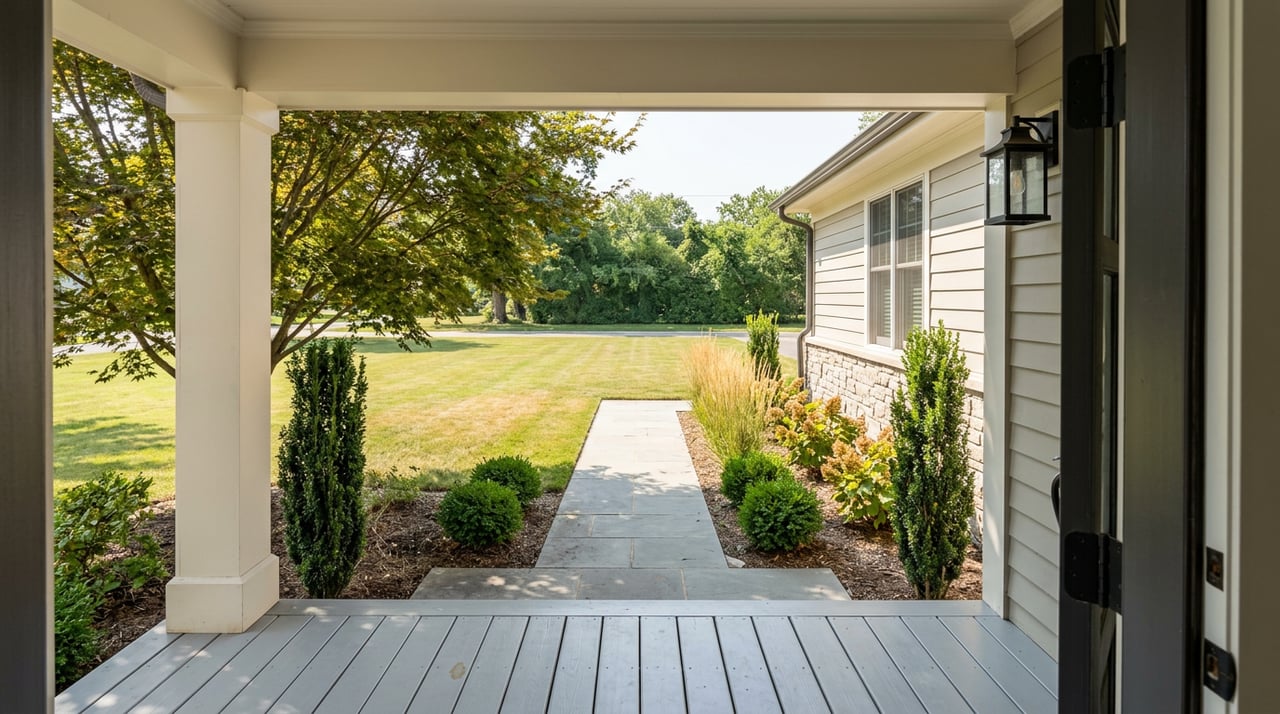
Two three-bedroom homes, similar square footage, similar age, similar finish level. One sits on a street in Spring Hill. The other sits half a mile away, also in Spring Hill, also on a street with the same city name on the mailbox. The second home costs roughly 46 percent more.
That is not a typo and it is not a fluke of one listing versus another. It is the ordinary math of buying in a city that the map draws as one place but that the county line quietly divides into two. If you have been watching Spring Hill's median price on a portal and treating it as a single number that describes a single market, you have been reading a blended average of two different housing markets wearing one zip code.
One city, two counties, two different price tags
Spring Hill sits across the Williamson-Maury county line, and that line is the actual organizing fact of the local market, not the school ratings page or the builder brochure. Over the past 12 months of closed sales through May 2026, homes on the Williamson County side of Spring Hill carried a median sale price of $715,000. Homes on the Maury County side carried a median of $490,000. That is a 46 percent gap between two halves of the same city.
The volume tells a similar story from a different angle. The Williamson side recorded 509 closed sales in that period. The Maury side recorded 576. Neither half is a rounding error next to the other. Both are active, well-populated markets, they are just priced on different curves.
| Williamson County side | Maury County side | |
|---|---|---|
| Median sale price, 12 months through May 2026 | $715,000 | $490,000 |
| School district | Williamson County Schools | Maury County Public Schools |
| Example high schools | Summit High, Independence High | Spring Hill High, Battle Creek High |
| Closed sales, past 12 months | 509 | 576 |
| A leading new-construction community | August Park (Toll Brothers) | Harvest Point |
At the entry-level end of the market, the gap nearly closes. In sales under $500,000 over the same period, the Maury side accounted for 397 transactions at a median of $415,000, while the Williamson side accounted for 147 at a median of $420,000. That convergence at the lower price tiers is itself a clue: the wide gap in the overall medians is being driven by what happens above $500,000, not by a uniform premium on every home in Williamson County.
The line runs through school zoning, not through construction quality
Here is the part that surprises relocating buyers most. Many of the same national and regional builders work both sides of the county line. The difference in price is not a difference in who is pouring the foundation or framing the walls. The difference is which school district your address is zoned into the moment you close.
Addresses on the Williamson County side feed into Williamson County Schools, a district that consistently ranks among the strongest in Tennessee. Summit High School, one of the district's Spring Hill-area schools, ranks 23rd in the state with a 9 out of 10 GreatSchools rating, 53 percent AP participation, and a graduation rate near 99 percent. Addresses on the Maury County side feed into Maury County Public Schools, including Spring Hill High School and the newer Battle Creek High School.
That single variable, school district assignment, is doing more work in the price gap than lot size, garage count, or finish package. Buyers are not really paying $225,000 more for a slightly bigger primary suite. They are paying for the district boundary printed on the property record.
The high school finishing its buildout this month
Here is a piece of the story that is happening in real time this school year. Battle Creek High School, on the Maury County side, opened for the 2024-25 school year to relieve overcrowding at Spring Hill High School. The Maury County School Board approved its attendance zones in December 2023, and the school phased in grade by grade rather than opening as a complete four-year high school on day one. It served grades 9 through 11 during the 2025-26 school year. This year, 2026-27, is the first year Battle Creek High School serves a full 9-through-12 student body.
For a buyer weighing the Maury side against the Williamson side, that matters beyond trivia. A brand-new high school that just finished its first complete graduating-class cycle has a different trajectory than a district that has been stable and top-ranked for a decade. It is a variable still in motion, and it is worth watching rather than assuming it will look the same in three years as it does today.
What the property tax bill actually looks like
The sale price gap is not the whole carrying-cost gap. Williamson County levies the highest average property tax burden of any county in Tennessee, an average of $1,879 per year, or about 0.56 percent of median home value, according to county tax data. Maury County, by contrast, voted in June 2026 to hold its property tax rate steady at $0.74 per $100 of assessed value, a move county leaders said would generate just under $2 million in additional revenue for the county without raising the rate itself.
Put plainly, a buyer choosing the Williamson side is not only paying a higher purchase price. They are pairing that higher price with the state's highest average property tax rate. A buyer choosing the Maury side is paying less up front and holding a county tax rate that local leaders chose to keep flat this year rather than raise it. Neither fact by itself tells you which side is the better financial decision for your household. Together, they tell you the actual shape of the tradeoff, which is more than the median price alone can show you.
Where the tidy story breaks down
If the pattern here were simply Williamson equals expensive and Maury equals affordable, this would be a shorter article. It is not that clean, and the exception is worth knowing before you rule out a side of the county based on the median alone.
Cedar Brooke, on the Maury County side, is the newest custom home community in that part of the city, with active listings running from $1.15 million to $1.29 million, built by custom firms rather than production builders. That is not an entry-level Maury County price. It sits above most of what is currently active on the Williamson side outside of a handful of boutique communities like Maebry, which starts around $1.08 million for homes over 4,000 square feet.
HOA fees follow a similarly uneven pattern. Across Spring Hill, monthly HOA dues run from as little as $10 to as much as $504, and that range shows up on both sides of the county line rather than correlating cleanly with which county collects your property tax. A newer subdivision with a pool and trail system can carry a fee well above an older, larger-lot community regardless of which school district it feeds.
The lesson is not that county doesn't matter. It clearly does, at the median. The lesson is that county is a strong predictor, not a guarantee, and a buyer who rules out an entire side of the line based on the median price alone may miss the exact custom-built or entry-level home they are looking for.
Where the new construction is actually concentrated right now
If new construction is part of your search, the two sides of Spring Hill are not building the same volume in the same places.
On the Maury County side, Harvest Point is the single most active community in the city, accounting for roughly one in four of all Spring Hill home sales over the past 12 months. Brandon Woods, Ole South Properties' flagship community, and Southern Springs, a Del Webb 55-plus community, round out the most active Maury-side developments.
On the Williamson County side, August Park, built by Toll Brothers, is the area's leading new-construction community, while Saddlewalk at June Lake recorded 175 sales over the same period, the highest volume of any established Williamson-side neighborhood.
A few questions worth asking before you tour
Can I confirm which county an address falls in before I schedule a showing? Yes. The county line is a matter of public parcel record, not a judgment call, and it can be verified through county assessor records before you ever walk through a door.
Can the county line run through a single neighborhood? In some cases, yes. School zoning can vary within the same community, particularly in larger developments that were built out in multiple phases over several years. If a specific listing matters to you because of its school assignment, that assignment is worth confirming directly rather than assuming based on the subdivision name.
Is one side simply the better choice? That depends on what you are optimizing for; monthly carrying cost, school district stability, proximity to a specific employer, or long-term resale pool are all reasonable priorities, and they don't all point the same direction. The honest answer is that the county line changes the tradeoffs, not that it picks a winner for you.
Spring Hill's median price was never lying to you. It just never told you it was describing two markets at once. If you are comparing Spring Hill against Franklin, Nolensville, or another Middle Tennessee suburb, knowing which side of that line a specific listing sits on is the difference between comparing apples to apples and comparing a blended average to your actual budget.
If you want a second set of eyes on a specific address, county line and all, The Gardner Group can walk you through what a given street actually means for your school zoning, your tax bill, and your long-term plans. Start your home search today.