Wondering whether a Nashville home would actually work as a short-term rental, or just look good in a listing photo? That is one of the biggest questions buyers face when they start exploring investment opportunities in Davidson County. If you are thinking about buying with STR use in mind, you need more than a pretty house and a great location pin. You need to know how demand, zoning, permit rules, and day-to-day logistics all fit together. Let’s dive in.
Start With Nashville Demand
If you are evaluating Nashville homes for short-term rental use, the first question is not about finishes or furniture. It is whether the property can attract guests consistently enough to support your goals.
Nashville and Davidson County generated a record $11.2 billion in visitor spending in 2024 and welcomed 16.9 million daily and overnight visitors. That level of travel activity matters because it shows that visitor demand is broad and active across the year, not limited to one or two weekends.
Major events can create especially strong lodging demand. CMA Fest generated $77.3 million in direct visitor spending, July 4th filled 27,136 hotel rooms, and New Year’s Eve 2024 generated $41 million in direct visitor spending, with downtown hotel demand up 7.2% year over year.
That does not mean every home in Nashville is a strong STR candidate. It does mean the best properties are usually the ones positioned to benefit from both major event surges and steady leisure travel the rest of the year.
Check Legal Eligibility First
Before you think about revenue, design, or amenities, confirm whether the property can legally operate as a short-term rental. In Nashville, that step comes first.
The city requires a short-term rental permit before a property may be listed, and that permit must be renewed every year. Nashville also offers an Eligibility Viewer so you can check what permit type may be available for a specific address before you make a buying decision.
This is one of the most important parts of your evaluation. A house can be attractive, well located, and updated, but if it does not qualify for the permit type you need, it may not fit your plans.
Know the two permit paths
Nashville separates permits into owner-occupied and not-owner-occupied categories. Those are very different from an investment standpoint.
An owner-occupied permit is tied to a natural person who permanently resides at the property. It is limited to up to four sleeping rooms, and in single-family and two-family zoning districts, the city generally allows only one permit per lot.
New not-owner-occupied permits are more restricted. They are issued only in certain zoning districts, and new permits are not allowed in AR2A, R, RS, or RM districts.
If a property already has a not-owner-occupied permit in one of those districts, you should still be careful. Nashville says existing permits in those districts are not transferable if the property is sold or transferred.
Do not assume a permit transfers
This is where many buyers can get into trouble. In Nashville, a short-term rental permit is not a transferable asset.
The city states that permits may not be transferred or assigned to another person, entity, or address. If ownership changes, the permit is canceled.
That means you should evaluate every purchase as if you will need to qualify for a fresh permit. If the seller currently operates the home as an STR, that history may be helpful context, but it should not be the basis of your underwriting.
Zoning still matters
Permit type is only part of the picture. The zoning district matters too.
According to Nashville’s land-use table, both short-term rental permit types are prohibited in NS districts. The city also notes that on certain single-family, Residential Neighborhood, and Residential Limited lots, an owner-occupied STR permit is not allowed in a detached accessory dwelling unit.
If a property has a detached unit, special layout, or unusual zoning, it is worth slowing down and verifying the details before you move forward.
Understand the setup requirements
Even if a property is eligible in theory, you still need to confirm it can meet Nashville’s application and operational requirements.
Before a permit is issued, Nashville may require proof that taxes have been paid, a floor plan showing rooms, doors, windows, and smoke detectors, and a certification from a licensed architect, engineer, or home inspector for single-family and two-family homes. Multifamily properties require a Fire Marshal inspection.
For owner-occupied permits, the city also requires at least $1 million in liability insurance per occurrence, notice to adjacent owners, and a statement that the STR will not violate HOA or condo documents. The current city permit fee is $313.
Your listing must also include the permit number or permit image. If you are comparing homes, think about which ones can meet these requirements with the least friction and cost.
Focus on location and guest convenience
In Nashville, STR location is about more than chasing one trendy pocket. A practical location works because it gives guests easier access to the city’s demand drivers and makes the stay simple.
Properties that are easier to reach, easier to park at, and easier to navigate often have an advantage. During large events, that convenience can matter even more.
A city survey of New Year’s Eve visitors found that 16% chose short-term rentals while 68% chose hotels. That means STRs are competing with hotels for travelers who often value smooth arrivals, easy logistics, and low-friction stays.
What to look for in the location
As you compare homes, ask practical questions like these:
- Is the address easy for guests to find?
- Is parking straightforward?
- Can guests check in without a lot of host intervention?
- Does the property make sense for year-round travel, not just one event weekend?
- Is it positioned to benefit from downtown entertainment, conventions, sports, festivals, or holiday travel?
Nashville’s annual events calendar shows recurring activity across music, arts, food, sports, and seasonal events. That is why homes that can appeal across multiple seasons are usually stronger candidates than homes that depend on one peak weekend.
Evaluate the house like an operator
A home can be stylish and still be awkward to run as a short-term rental. When you tour properties, try to think like both a guest and an owner.
Airbnb’s published guidance says guests frequently search for features like pool, Wi-Fi, free parking, air conditioning or heating, kitchen, hot tub, washer or dryer, self check-in, TV or cable, and BBQ grill. In practice, the basics often matter most.
For many Nashville STR buyers, the highest-value essentials are:
- Reliable Wi-Fi
- Easy parking
- A functional kitchen
- Strong heating and cooling
- Self check-in
Luxury extras may help, but usually only after the core experience is already solid.
Self check-in matters more than you think
Many guests filter for self check-in, and Airbnb identifies it as one of the top searched amenities. That makes arrival flow a real part of the property’s value.
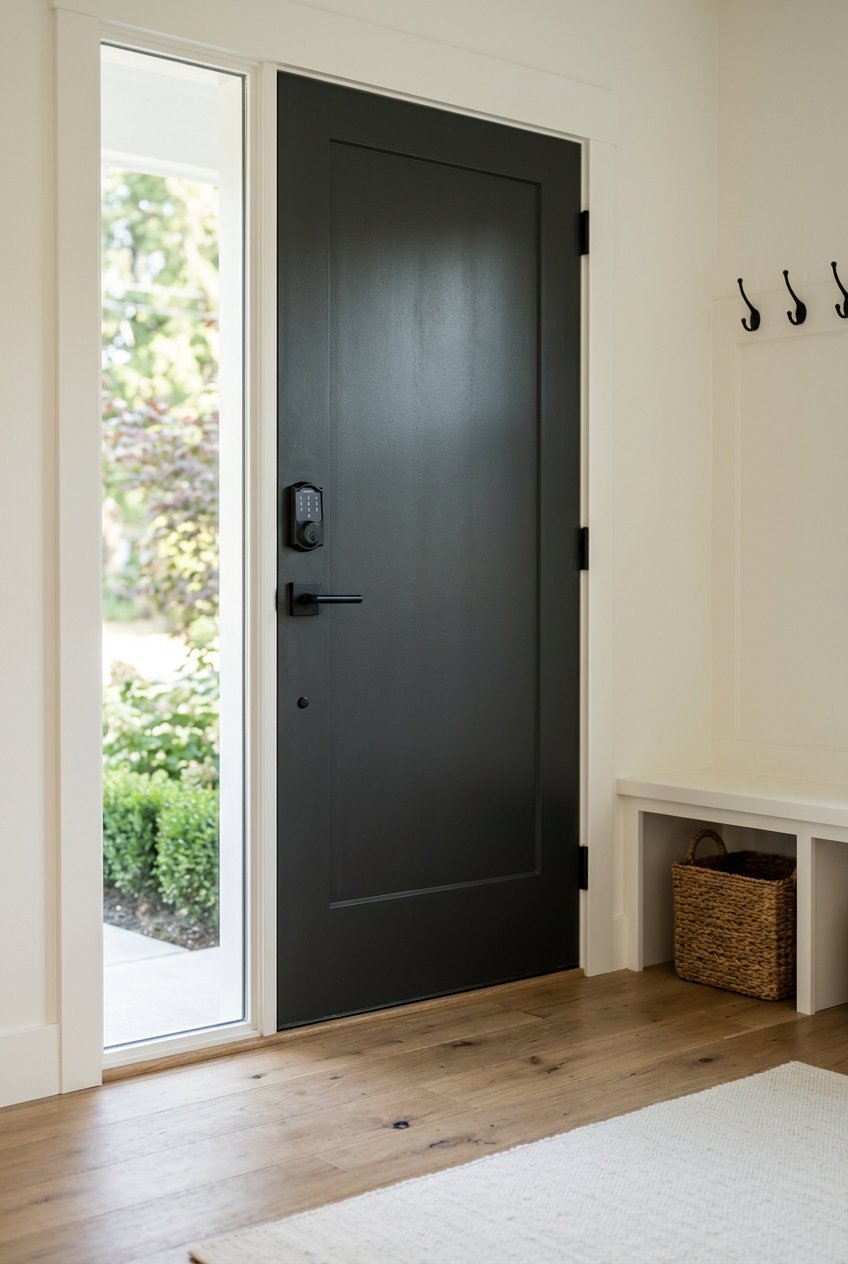
A smart lock, keypad, or lockbox can reduce friction and make the property easier to manage, especially if you are not nearby at every arrival. If a home has an awkward entry setup or inconsistent access, that can create avoidable stress.
Layout can affect usability
Nashville’s rules cap sleeping rooms at four for owner-occupied permits. More broadly, the city’s occupancy rules limit the maximum number of occupants to twice the number of sleeping rooms plus four, with a hard cap of 12.
That means layout matters. A home that works cleanly as a two- to four-bedroom rental with enough bathrooms, storage, and flow is often more practical than one with space that looks flexible but does not function well for guest stays.
Safety readiness should be part of your review
The city requires floor plans that show smoke detectors, and it will not issue a permit without the required certification or inspection. Because of that, older homes or heavily altered homes may deserve a closer look.
As you evaluate a property, ask whether the floor plan will be easy to document and whether the home appears likely to meet inspection expectations without major updates. A lower purchase price can lose its appeal quickly if the setup work becomes extensive.
Ask these questions before you buy
If you want a practical screening tool, use this checklist before making an offer:
- What permit type can this address obtain?
- Does the zoning district, overlay, SP, or PUD allow the intended STR use?
- Is there an HOA, condo rule, or other covenant that restricts short stays?
- Will the property meet the sleeping-room cap and occupancy formula?
- Can you satisfy the local responsible-party requirement?
- If the seller has a permit now, are you still underwriting this as a fresh permit application?
- Does the home have the parking, access, and layout that guests expect?
- Will the property work during multiple travel seasons, not just major events?
That last point matters. The strongest candidates are usually legally eligible, operationally simple, and well positioned for ordinary travel demand as well as event-driven bookings.
Know the operating rules
If you move forward with a Nashville STR, you will need to plan around the city’s operating standards. Those rules affect how the property functions after closing.
Nashville requires a local responsible party to be posted inside the unit and available 24/7 during each rental period. On owner-occupied applications, that responsible party must live within a 25-mile radius of the property.
The city also requires the permit holder to remit applicable business, sales, and hotel occupancy taxes. Stays must be at least 24 hours and no more than 30 consecutive days.
These rules are part of why operational simplicity matters so much. A property that is easy to monitor, easy to access, and easy to maintain is often a better long-term fit than one that looks exciting but creates avoidable day-to-day complications.
The bottom line for Nashville buyers
A strong Nashville short-term rental candidate is usually not the flashiest home on the market. It is the home that checks the legal boxes, fits the zoning, supports the permit process, and offers a guest experience that is simple and dependable.
If you are comparing homes in Davidson County, the smartest move is to evaluate each one through three lenses: legal eligibility, operational ease, and year-round demand potential. When those pieces line up, you have a much stronger foundation for a sound buying decision.
If you want help evaluating Nashville homes for short-term rental use, Camille Birkhead can help you look at each property through both a local market lens and a practical investment lens.
FAQs
What should you check first when evaluating a Nashville home for short-term rental use?
- Start by confirming whether the address is eligible for the permit type you need through Nashville’s short-term rental eligibility tools and zoning rules.
Can a seller transfer a Nashville short-term rental permit to a buyer?
- No. Nashville states that short-term rental permits cannot be transferred or assigned, and a change in ownership cancels the permit.
What permit types are available for Nashville short-term rentals?
- Nashville offers owner-occupied and not-owner-occupied permits, and each type has different eligibility rules, zoning limits, and operating requirements.
How many guests can a Nashville short-term rental host?
- Nashville caps occupancy at twice the number of sleeping rooms plus four, with a maximum of 12 occupants.
What features matter most in a Nashville short-term rental property?
- Practical features usually carry the most weight, including reliable Wi-Fi, easy parking, a functional kitchen, solid HVAC, and self check-in.
Does location matter for a Nashville short-term rental investment?
- Yes. The best candidates are often properties that are easy for guests to reach and positioned to benefit from both major event weekends and year-round visitor demand.